
MakePlayingCards.com for MTG Proxies: Great Quality, Slower Shipping, More Hassle
MakePlayingCards.com has been one of the classic ways to print MTG proxies, but shipping, customs, tariffs, and newer US-based options make it less automatic than it used to be.

MakePlayingCards.com, usually shortened to MPC, has been one of the big names in proxy printing for years. If you hang around r/mpcproxies, you will see it everywhere: MPC this, MPCFill that, S30 versus S33, bleed edge, XML upload, 612-card orders, shipping questions, tariff complaints, and people posting giant stacks of cards that cost a tiny fraction of the real decks.
And to be fair, MPC earned a lot of that reputation. Their print quality can be very good. Their card options are broad. Their site can handle large custom decks. The community around MPCFill made the process much easier than it used to be. For a long time, if someone asked “where should I print a full proxy cube?” the default answer was basically MPC.
I still respect them. I have personally ordered from them around six or seven times, and the cards themselves were good. The problem is everything around the cards: shipping time, shipping cost, customs risk, tariffs, and the general waiting game. Twice, my deck was held at customs for about two extra weeks, and I had to pay a fee to get it released. That does not happen to everyone, but when it happens to you, the “cheap proxy order” suddenly feels a lot less clean.
So this is not an anti-MPC article. MPC is good. The real question is whether MPC is still worth the hassle when US-based options now exist. Cough. NotMPC. Cough.
What MakePlayingCards.com actually is
MPC is not an MTG proxy site. It is a custom playing card and game card manufacturer. You can use it for prototypes, poker decks, custom card games, flash cards, trading cards, board game components, and yes, MTG proxies for casual use.
The product most proxy users care about is their Custom Game Cards, 63 x 88mm. That size is close to Magic card size and is the standard used by the MPC proxy community. Their product page allows decks from 18 cards up to 612 cards, with each card customizable on the front and back.
The most common proxy cardstocks are usually S30 and S33. S30 is the cheaper standard smooth stock. S33 is the popular premium smooth stock with a black core. MPC describes S33 as a superior smooth cardstock with stronger visual contrast, a cleaner feel, and a black opaque center layer that blocks light from shining through the card.
For casual proxy play, S33 is usually the safe pick. S30 can still be fine, especially sleeved, but if you are already paying for an overseas order, I would rather not cheap out on the one thing I will touch every game.
The usual MPC proxy process
You can technically upload everything manually through MPC’s site. I would not recommend doing that unless you enjoy suffering in browser tabs.
The normal proxy workflow is:
- Build your decklist in Moxfield, Archidekt, a text file, or whatever deck tool you use.
- Go to MPCFill.
- Paste or import your card list.
- Pick the art you want for each card.
- Choose your stock, finish, backs, and order settings.
- Export the XML.
- Use the MPC Autofill tool to push the order into MakePlayingCards.
- Review every single card before paying.
That last step matters. Do not trust any automation blindly. Check the fronts, backs, crop, double-faced cards, bleed, and quantity. If something looks wrong in the final preview and you submit anyway, that is on you.

Cost: cheap per card, less cheap after shipping
MPC pricing is bracket-based. You do not pay a clean “one card equals one price” rate. You choose a deck size bracket, like up to 108 cards, up to 126 cards, up to 396 cards, or up to 612 cards. If you need 100 cards and choose the 108-card bracket, you are paying for that bracket either way. Add tokens, lands, sideboard cards, staples, or random test cards until the bracket is full.
This is where MPC can be very strong. Big orders usually make the per-card price much better. A 612-card order can be a lot cheaper per card than ordering one Commander deck by itself.
| Cost area | What to know | Practical take |
|---|---|---|
| Base card price | Usually gets better as your bracket gets larger. | Small orders are rarely the best value. |
| Cardstock | S33 costs more than S30 but feels like the safer proxy choice. | I would use S33 for decks I actually plan to play. |
| Foils | Foil orders can get expensive fast and apply settings across the whole order. | Fun for experiments, not my default for full decks. |
| Shipping | Shipping is calculated at checkout and can make the order feel much less cheap. | Always judge the final landed cost, not just the card price. |
| Tariffs, tax, customs | Depending on country, carrier, and current trade rules, extra fees can appear. | This is the part that makes MPC annoying compared with local options. |
Community examples vary a lot because country, shipping method, stock, order size, exchange rate, and tariffs all change the math. Older posts often show very low per-card prices. Newer posts are more mixed, especially for US buyers dealing with higher shipping and tariff-related checkout lines.
The honest way to compare MPC is not “how cheap is the card before shipping?” It is “how much did I pay total, how long did it take, and did anything get stuck at the border?”
The quality is the strongest argument for MPC
This is where MPC deserves praise. When the files are good, the final cards can look sharp, clean, and very playable. The S33 stock especially has a nice smooth finish, decent opacity, and a professional feel once sleeved.
Is it identical to a real Magic card? No, and it should not be used to trick anyone anyway. These are proxies. They are for casual play, testing, cube, custom decks, and not spending stupid money on cardboard. Use different backs, be clear with your table, and do not sell them as real cards.
But as game pieces? MPC can absolutely do the job.
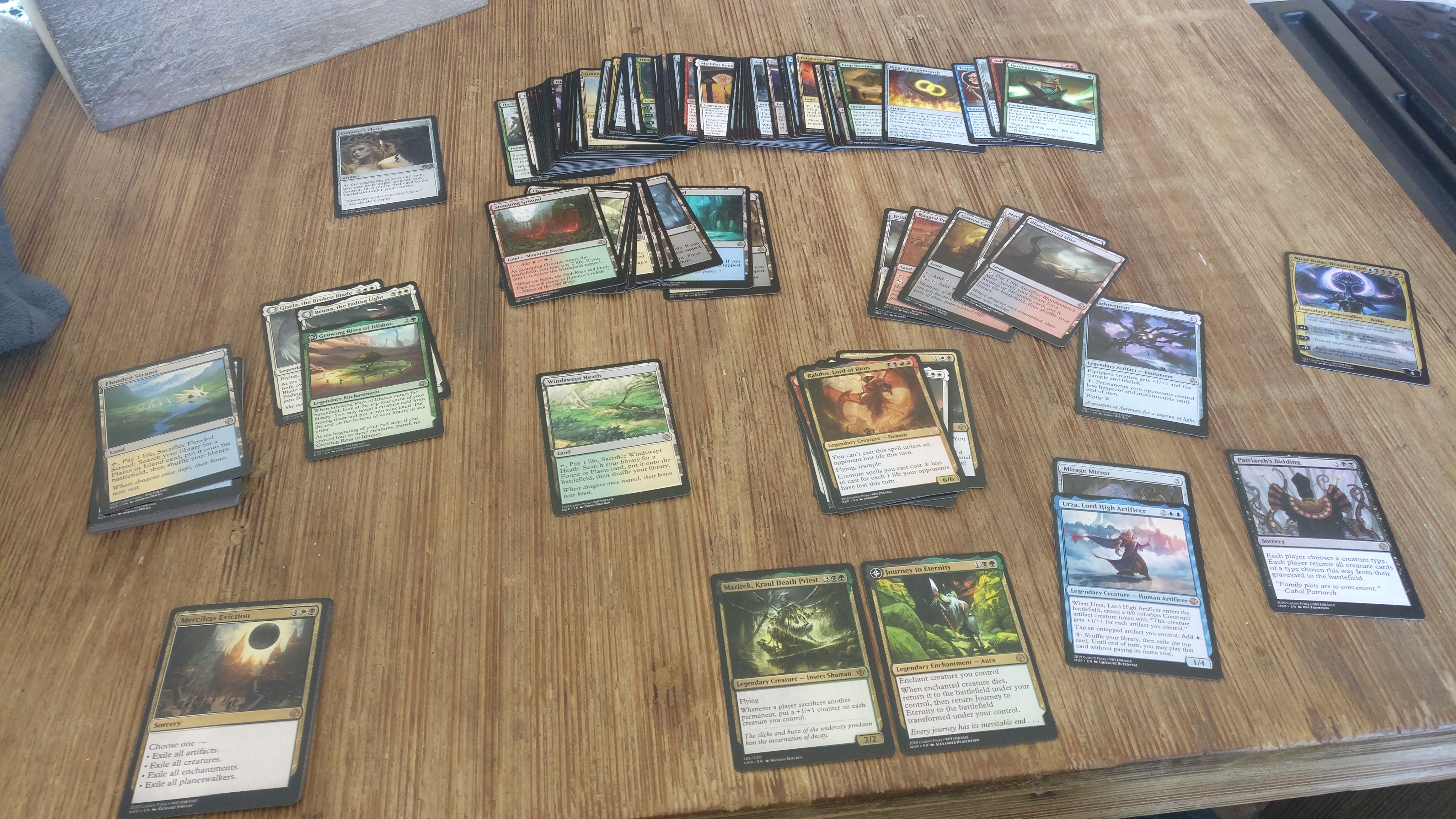
The biggest quality issue is usually not MPC. It is the source file. Bad resolution, bad bleed, bad cropping, washed-out art, too-small text, or weird AI-looking custom art will print exactly like the file you gave them. A printer cannot magically make a weak image good.
The r/mpcproxies wiki is still one of the better places to understand the basics, especially bleed. MPC expects extra artwork around the edges because part of the image gets cut off during manufacturing. If your card was not prepared for that, the result can look awkward even if the printing itself was fine.
The main problem: shipping is slower, less predictable, and more expensive than local US printing
This is the part people sometimes underplay because the cards are good.
MPC ships worldwide, but that does not mean it feels local. If you are in the US, ordering from overseas usually means longer shipping, higher shipping costs, more tracking anxiety, and more ways for the package to get delayed. MPC’s own shipping page says delivery dates are only estimates and that customs clearance can cause delays.
Personally, this is what pushed me away from treating MPC as the automatic answer. I ordered from them around six or seven times. The quality was good. But twice, customs held my deck for roughly two extra weeks, and I had to pay a fee before getting it. That is not the end of the world, but it is deeply annoying when all you wanted was a casual proxy deck.
For US buyers, tariffs made this even more annoying. There have been community posts about tariff charges appearing at checkout, and the general import situation has become less friendly to small cross-border orders than it used to be. Maybe your order goes through cleanly. Maybe it does not. That uncertainty is part of the cost.
And once you add shipping, tariffs, waiting, possible customs delays, and the hassle of tracking an overseas package, MPC starts looking less like the obvious best deal and more like one option among several.
Pros and cons of MakePlayingCards.com for MTG proxies
| Pros | Cons |
|---|---|
| Very good print quality when files are prepared correctly. | Shipping to the US is slower than ordering from a US-based printer. |
| Strong MPCFill community support and lots of tutorials. | Shipping costs can hurt the final price. |
| Good cardstock options, especially S33. | Tariffs, duties, tax, or customs issues can complicate the order. |
| Great for large orders, cubes, and multiple decks. | The setup process still has friction, especially for first-time users. |
| Up to 612 cards in one custom deck. | Bracket pricing means you should plan carefully or waste paid slots. |
| Lots of finish, packaging, and print options. | Too many options can be confusing if you just want a simple proxy deck. |
When MPC still makes sense
I would still consider MPC if I were printing a large cube, a massive batch of Commander decks, a weird custom project, or something where I wanted access to the huge MPCFill ecosystem and did not care about waiting.
I would also consider it if I were outside the US and the shipping/customs situation made more sense for my country than it does for a US buyer. In some places, MPC may still be the cleanest option.
And if someone says, “I used MPC and my order came out great,” I believe them. A lot of orders do come out great. That is why the service became so popular in the first place.
When I would skip MPC
If I were in the US and just wanted one Commander deck, I would be much more skeptical now.
The quality is good, but for proxying, I am not chasing a luxury import experience. I want playable, good-looking cards, printed well, delivered quickly, without international shipping drama. Once local US competitors offer similar quality, similar or better final pricing, faster delivery, and no tariff headache, MPC becomes harder to justify.
Cough. NotMPC. Cough.
That is not meant as a cheap shot. It is just the current reality. If the end product is a casual proxy card, I care about the final card in my sleeve and the total hassle it took to get there. I do not get extra style points because my package traveled farther.
My actual recommendation
MPC is a good printer. It deserves credit for quality, options, scale, and the entire proxy workflow that grew around it. Without MPC and MPCFill, the proxy community would be worse off.
But I would not blindly recommend it as the default choice anymore, especially for US players.
Use MPC if you are placing a large order, you understand the workflow, you are comfortable checking every file, and you are okay with overseas shipping. Avoid it if you need the cards quickly, hate customs surprises, or are only saving a few dollars after shipping and tariffs.
For me, the cards were good. The hassle was not. And since we are talking about proxies, that matters. The whole point is to make the game easier to play, not to turn a deck order into an international shipping side quest.
Comments (0)
Join the discussion. Log in or create an account to comment.